A Rico Microgrid Can...
-
Provide Reliable Backup Power in the Event of an Outage
-
Lower Pressure on SMPA Rates
-
Power the Nearby Cellular Tower and CDOT Facility
-
Comply with Top Safety Requirements
-
Meet Historic District Aesthetic Guidelines
Frequently Asked Questions (Rico Microgrids)
Q: When power goes out, is the switch to the battery system seamless? If it is, how do you alert the community?
A: No, there would likely be a short period of time between the outage and the power being picked up by the battery. This is to allow for a phased reconnection, which causes less stress on the circuit protection. The exact time to reconnect is being determined during the final design phase. We are looking into utilizing Rico’s emergency messaging system, and residents can already sign up for text and email notifications via SMPA SmartHub.
Q: Will the grid tied solar systems in town continue to charge the battery bank in the event of an outage?
A: Yes. While these systems currently shut down during an outage for safety, the microgrid will allow them to feed into the battery. This reduces the load and extends the life of the battery bank during an emergency. Net meters will still give solar bank credit during an outage.
Q: Can we ensure that when there are outages, that the cell tower will still be powered for emergency response/ medical calls? As of right now, both internet and cell service go out.
A: Yes, the cell tower is located on the circuit backed up by the microgrid. While we cannot assign specific priority to the tower, we will communicate with residents to reduce non-vital power use to sustain the battery life as long as possible.
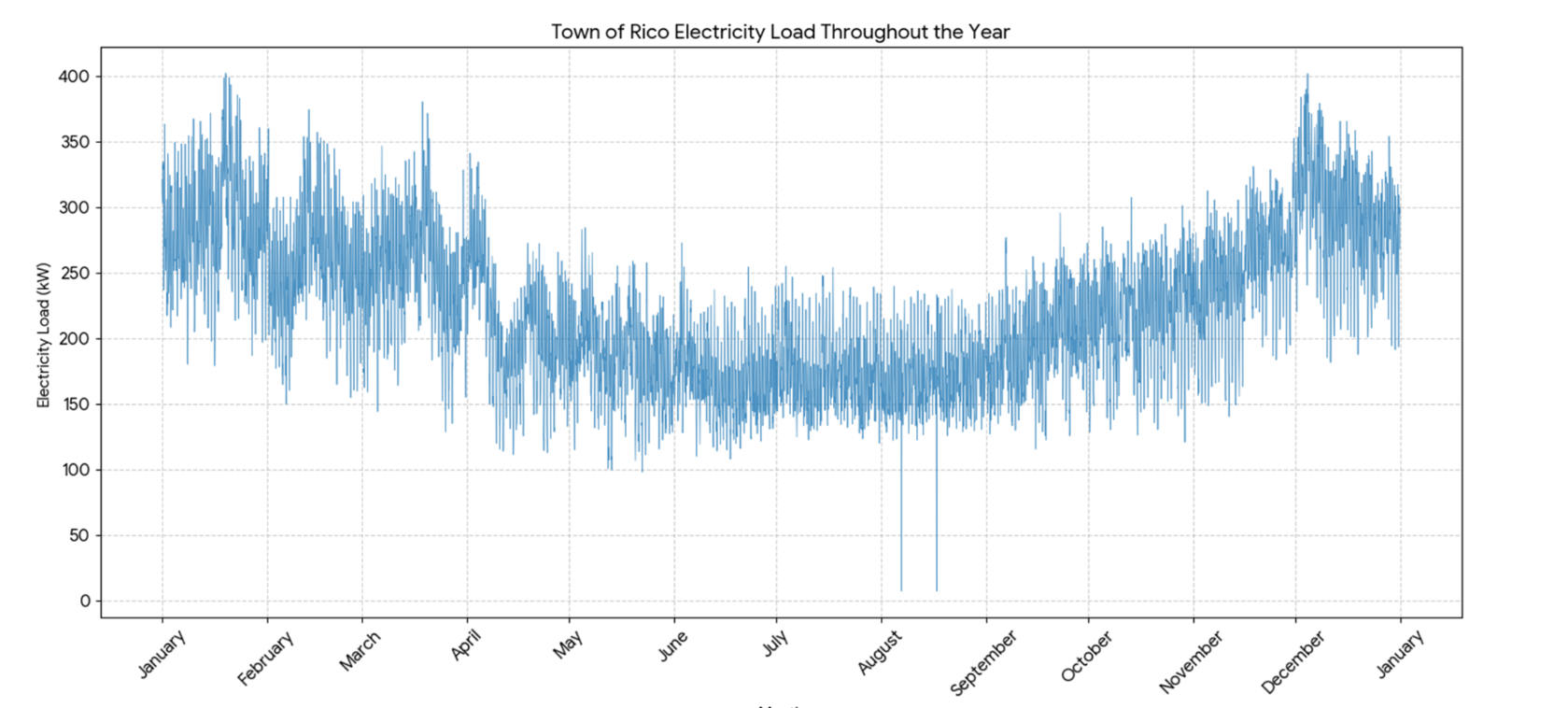
Q: What is the typical hourly Rico KWH total consumption?
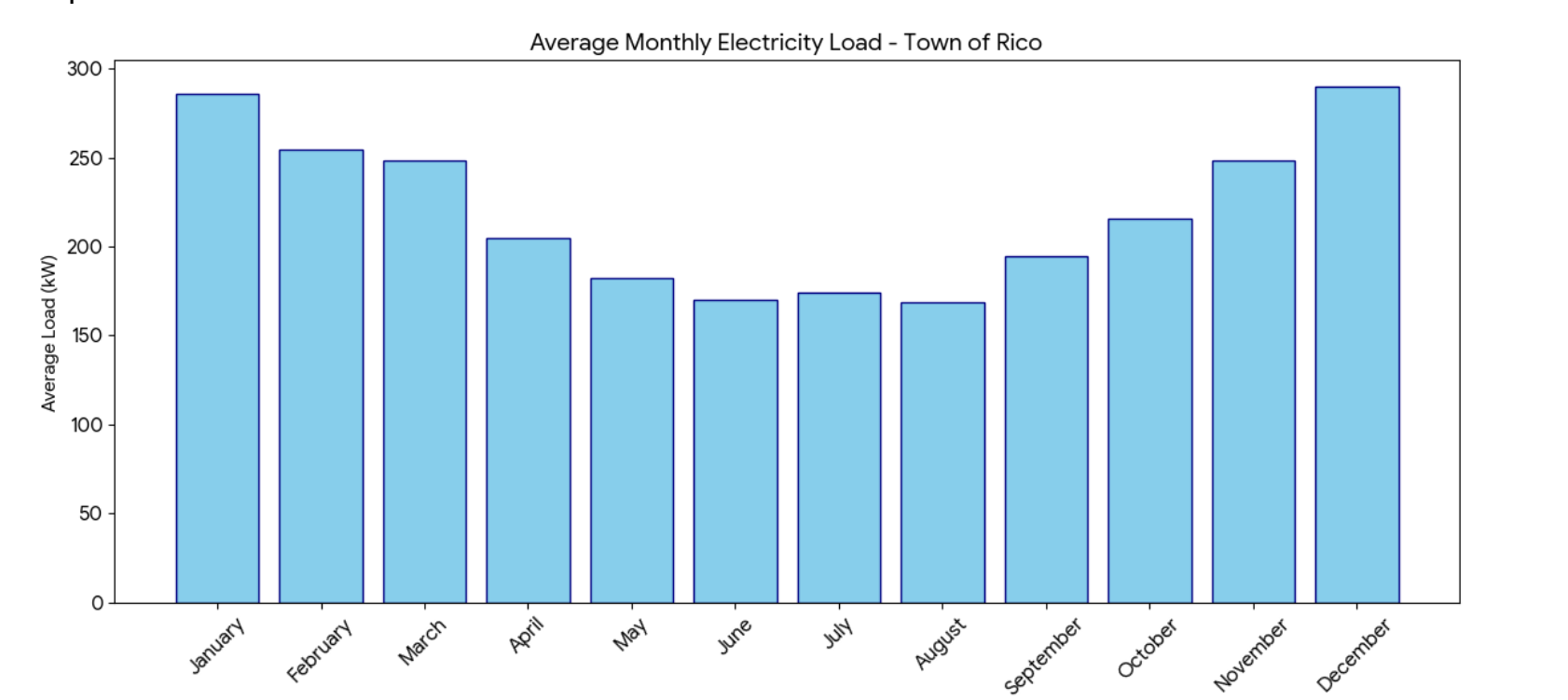
A: Historic electricity load in Rico varies seasonally. In the winter, it typically ranges from 300-400 kilo-Watts; in the summer, it drops to between 100-200 kilo-Watts.
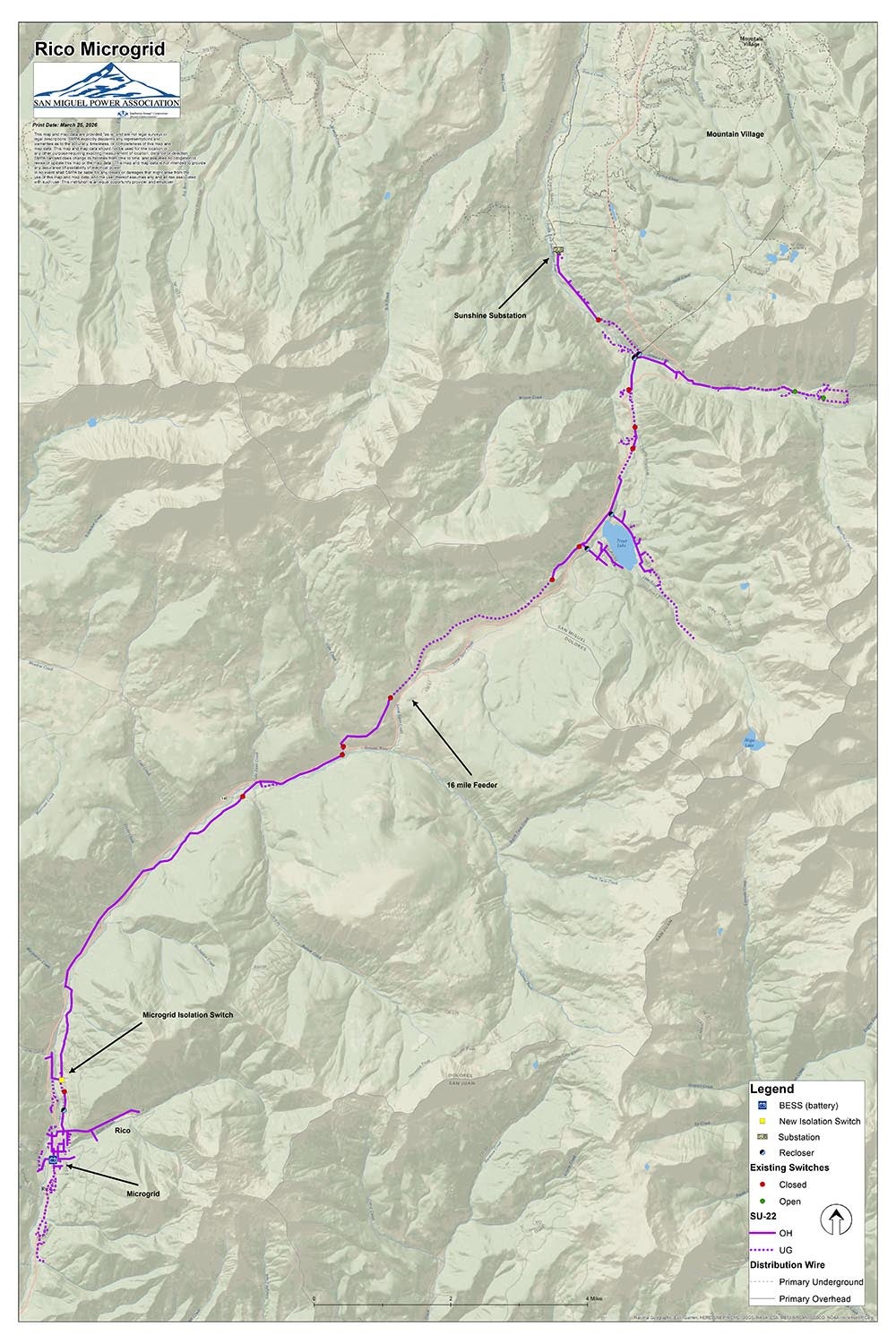
Q: What are the microgrid’s service boundaries in Rico?
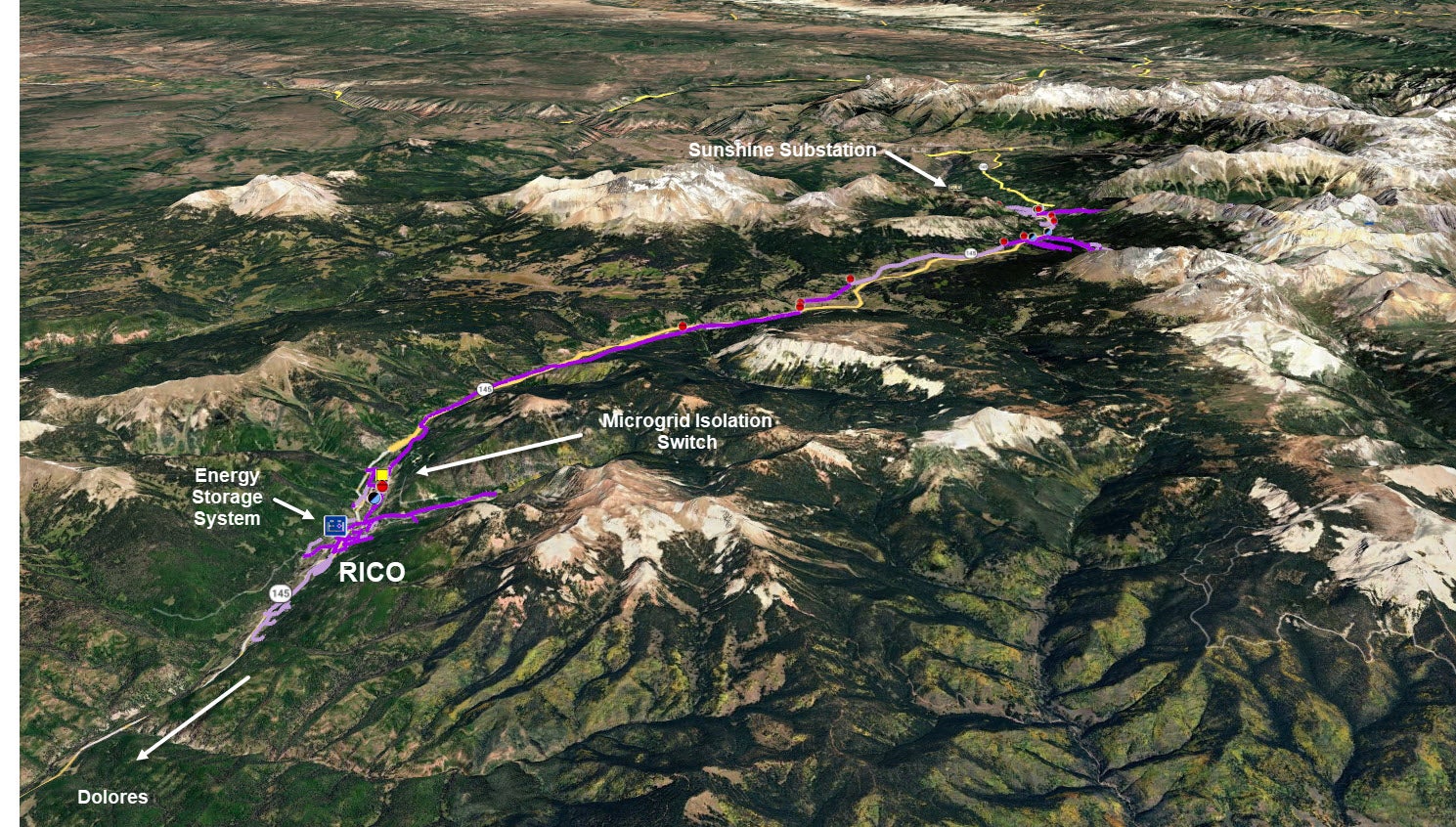
A: The microgrid would service the whole town of Rico, south of the proposed isolation switch location, located to the north to still provide service to CDOT.
Q: How much will this project cost Rico residents?
A: This will not directly cost Rico residents anything. Most of the costs are expected to be covered by grants and federal incentives. Any remaining costs are distributed across SMPA’s entire membership as part of annual reliability improvements. Long-term, this project helps stabilize energy costs for all members through "peak shaving."
Q: Can part of this implementation / plan construction include burying overhead lines in town?
A: Any new conductors required specifically for the microgrid can be undergrounded, but the project scope does not include undergrounding existing powerline infrastructure throughout the town.
If homes south of Rico in the Dolores River corridor receive power from the south, why is it so difficult to bring it to Rico?
Those lines belong to a different utility and the access point is many miles away. The cost and time required for planning, permitting, and building new lines from the south far exceed the cost of the microgrid. Additionally, those existing lines are not sized to power Rico and would require significant, expensive upgrades.
Is SMPA going to sell power back to Rico at an elevated price if there’s a power outage?
No. There will be no additional charges for backup power.
Q: How would the battery put itself out if it caught on fire?
A: What is the likelihood of the battery catching on fire? The chosen battery system is among the safest on the market with a very low probability of fire. It includes a Battery Monitoring System (BMS) on every cell that shuts the system down if temperatures exceed safe limits. If a fire were to occur, the enclosure includes a built-in fire suppression system. SMPA also provides safety training and standard operating procedures to the local volunteer fire district.
Q: Will there be noise?
A: There will be minor noise from cooling fans. This noise is greatest when the system is at full power (during an outage). When we toured the High School microgrid, there was no perceptible noise when the container was closed. When opened, it sounded like a refrigerator hum. The final design will adhere to Rico permitting requirements.
Q: Is there an impact on wildlife?
A: No. The Battery Energy Storage System (BESS) facility will cover a footprint of approximately 40’ x 80’ and will be fenced off from wildlife and unauthorized personnel.
Q: Since the battery storage infrastructure will be on Main Street, what will the fencing look like?
A: The project must go through the Rico building permitting process and adhere to the town’s codes. This ensures the design is cohesive with Rico’s historic district guidelines. There will be opportunities for public comment during that process.
Q: What was the reason for not choosing the site by the river but rather choosing to put it on historic Main Street?
A: SMPA proposed both sites, and the Town Board of Trustees requested that SMPA focus on the school property first. Both locations are technically feasible and have similar proximity to existing 3-phase power.
Q: Do SMPA co-op members need to approve?
A: No, individual members do not need to approve; the project has been approved by the SMPA Board. However, all members are welcome to attend board meetings to comment on this or any other topic.
Q: How can we work to tie this with geothermal energy?
A: The microgrid is being sized with a margin of capacity for future Town requirements. As geothermal projects take shape, SMPA will examine how the battery system can interface with geothermal needs, such as pumping or heat pumps.
Q: What is the current project timeline?
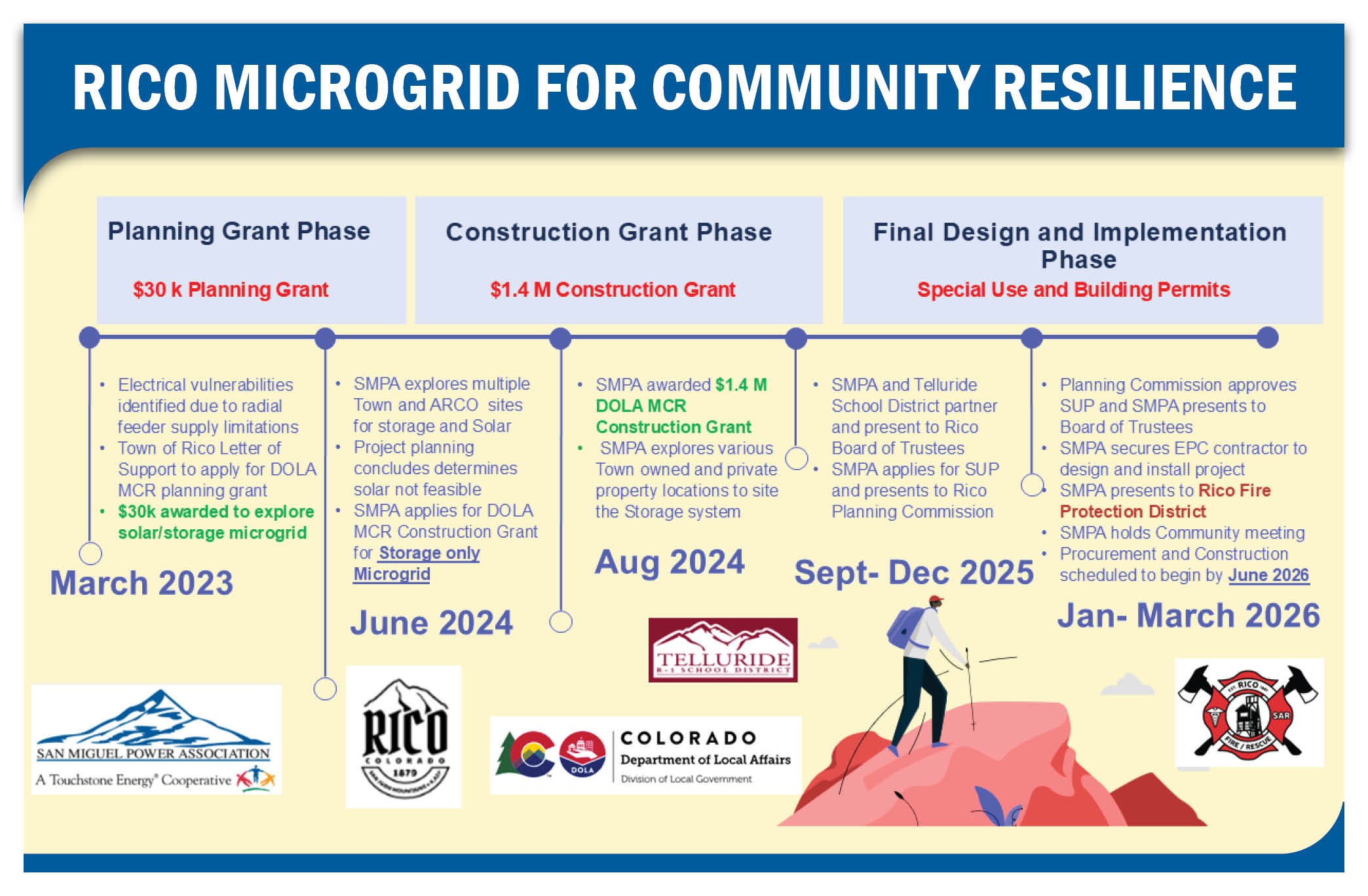
A: We anticipate final engineering and finance assessments to be complete by June. At that time, we will know if the project is moving forward. Construction is expected to take a few months, though equipment shipping may take up to 18 months.
Q: Will SMPA be less incentivized to repair lines that go down if we have this battery system in place?
A: No. Repairing lines remains a top priority. The battery system actually provides a greater margin of safety for our crews by giving them more flexibility in how they conduct repairs during an outage.
Q: Is $1.4 million the total cost?
A: No. After the grant and Federal ITC incentives, there will be a net cost to SMPA that is not fully determined yet, but we expect more than half the cost to be covered by those incentives.
Other Resiliency Projects: